ⵙⴱⵉⴱⴰ
Sebeïba
- 👥Tuareg
- 🗣︎Tamahaq
- 📍Djanet, DZ
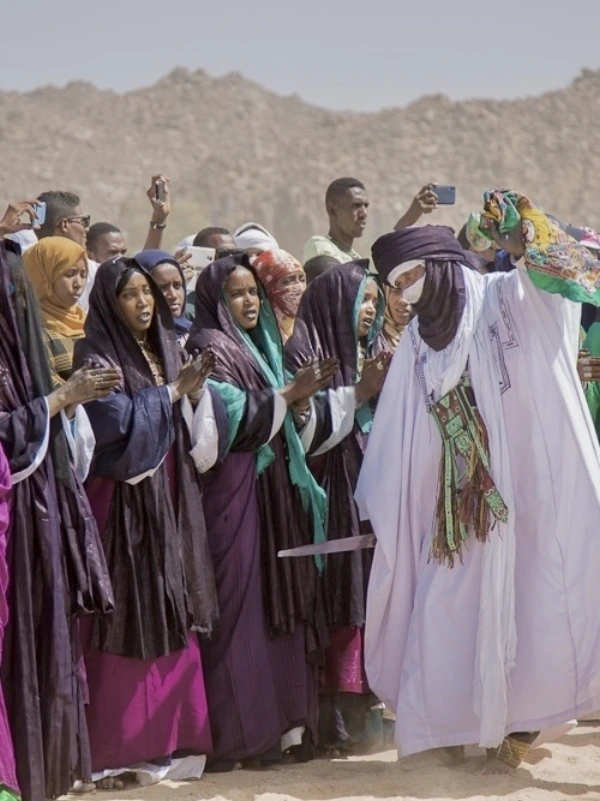
The performances associated with Sebeïba are practised by two communities living in Djanet during ten days in the first month of the Islamic lunar calendar.
Male dancers and female singers compete for the right to represent their communities during a nine-day contest called Timoulawine. The chosen winners take part in the Sebeïba ritual and ceremonies the next day. The male dancers, dressed as warriors, and female singers walk to a place called Loghya for the performance of the ritual. Once there, the male dancers parade and present their weapons, then stand in a ritual circle rattling their swords continuously as the women sing traditional songs to the rhythm of the tambourine. At the end of the day, the participants disperse.
Knowledge related to the ritual and ceremonies is transmitted directly from older to younger members. Local craftspeople (notably the Inaden blacksmith class) produce and repair the uniforms, weapons, jewellery, and musical instruments required for the ritual and ceremonies. The Sebeïba ritual and ceremonies are an important marker of cultural identity for Tuareg people living in the Algerian Sahara. They reinforce social cohesion, symbolically warding off potential violence between rival communities by simulating and transposing it to the realm of artistic competition.
Oral tradition traces the roots of Sebeïba back to the end of a historical conflict between two Tuareg groups, El Mihane and Zelouaz (also known as the Oraren and Tra’orfitt), about 3,000 years ago when they agreed to cease hostilities after hearing of the Pharaoh’s drowning in the Red Sea.