Ìrèké Oníbùdó
The Sugarcane of the Guardian
by D.O. Fágúnwà
- 👥Yorùbá
- 🗣︎Yorùbá
- 🌐Nigeria
Ìrèké Oníbùdó is a frightening and inspiring story of a character whose early life was beclouded by a plethora of vicissitudes and a deluge of suffering and intimidation from human and non-human forces. His father’s matrimonial and financial recklessness threw him into a precarious condition; but by a dint of industry, tenacity, and bravery, he was able to establish a transition from a deep pit of deprivation and poverty to a rostrum of royalty and podium of prosperity.
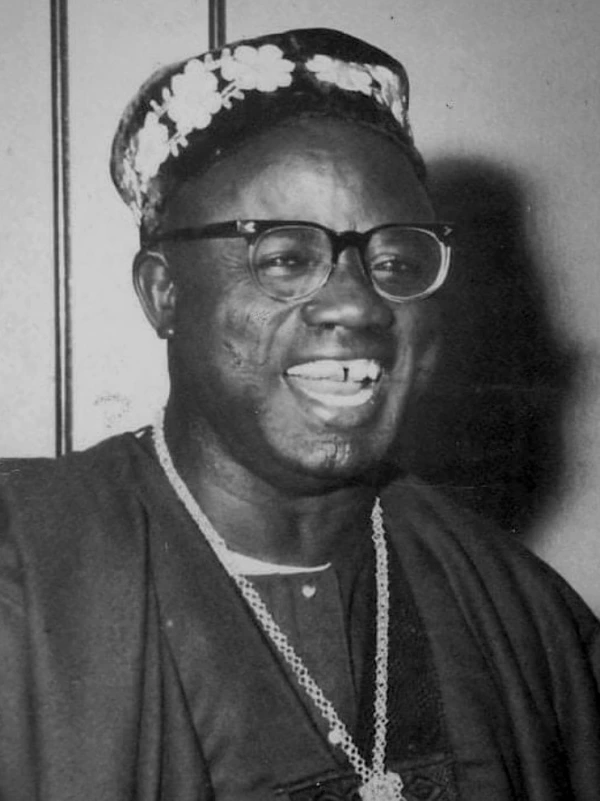
D.O. FÁGÚNWÀ was a Nigerian author who pioneered the Yorùbá-language novel. He was born in Òkè-Igbó, Ondo State. A chief of the Yorùbá, Fágúnwà studied at St. Luke’s School, Òkè-Igbó and St. Andrew’s College, Ọ̀yọ́ before becoming a teacher himself.
Fágúnwà’s first novel, Ògbójú Ọdẹ Nínú Igbó Irúnmọlẹ̀ (1938; The Forest of a Thousand Daemons), was the first full-length novel published in the Yorùbá language. In part because of its novelty, in part because of the richness of its language, in part because it treated familiar themes and relied heavily on folklores with which people were familiar, Ògbójú Ọdẹ was an instant success. Because of their classical nature, richness, and because of the prolificity of its author, Fágúnwà’s novels (he wrote four others after Ògbójú Ọdẹ) became so prodigious that they, for a long time, seemed to overshadow other writings in the same genre. Indeed, it is only recently that many, outside the circle of the educated Yorùbás, are beginning to realize that there were indeed some other literary works of note before and during Fágúnwà’s reign. Such was the intensity of the leverage Fágúnwà’s works wielded.