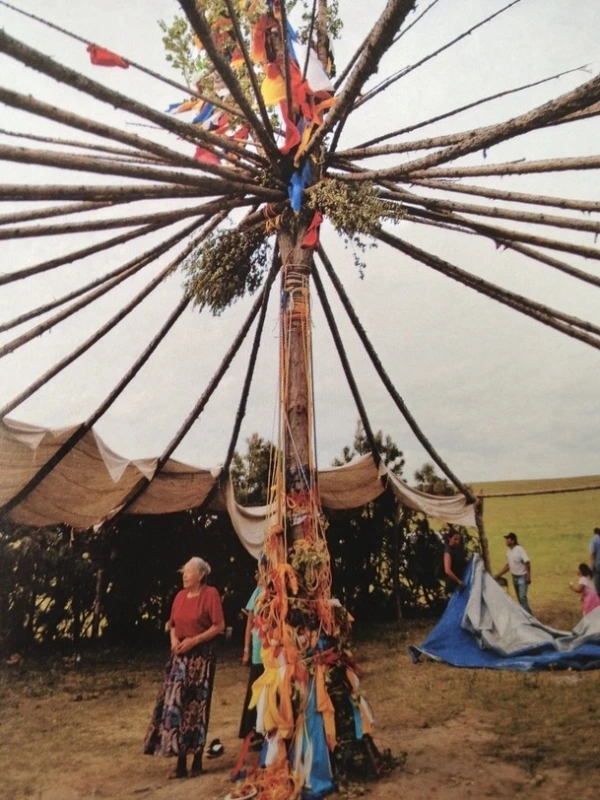
Wačípi
- 👥Sioux
- 🗣︎Sioux
- 📍North Dakota, US
Wačípi is a traditional gathering at which singing, dancing, and celebration play a central role. Performers dance in elaborate regalia, accompanied by a lowáŋ wičáša drum group.
While the term is used to refer generally to the contemporary powwows hosted by the Lakota and Dakota Sioux, the most famous example of wačípi is the Wiwáŋyaŋg Wačípi, the Sun Dance. The ceremony, which often lasts four days nonstop, is a sacred drama where the dancers enact a narrative of spiritual seeking, communal sacrifice, and rebirth.
The Wiwáŋyaŋg Wačípi takes place in a lodge called a hóčoka (dance arbor) constructed for each performance, with 28 poles, symbolizing the lunar cycle, surrounding a central cottonwood tree called waga čhaŋ to represent the axis mundi. Performances are not open to the public.
Another well-known example is the late-19th-century Wanáği Wačípi, the Sioux adaptation of the Northern Paiute nanigukwa from the Great Basin region. The millenarianism with which these “Ghost Dance” performances came to be associated was a result of Lakota influence.