Wanka
- 👥Quechua
- 🗣︎Quechua
- 🌐Peru
Until 1555, a series of plays were performed annually in Cuzco, the capital of the Inca Empire, as part of a strong Andean dramaturgical tradition that continued well into the colonial period. The shows were of two types: wanka, which were historical and memorial in character, and aránway, which typically depicted the everyday lives of the Quechua people.
These music dramas were composed by amautas, the intellectual class of poets, philosophers, scholars, and sages employed by the Inca nobility, to express imperial values and ideology. The works were recorded in khipus, the knotted Andean writing system, and, according to the Inca calendar, were performed in central plazas, accompanied by dancing and music.
The best known example of the genre is Apu Ollantay, a wanka that survived the late-18th century ban on theatrical works with Inca origins resulting from the crackdown following the failed Tupac Amaru rebellion. Though the oldest known manuscript of Ollantay comes from 1783, patterns in its structure suggest that this script was a colonial transcription from the original khipu format.
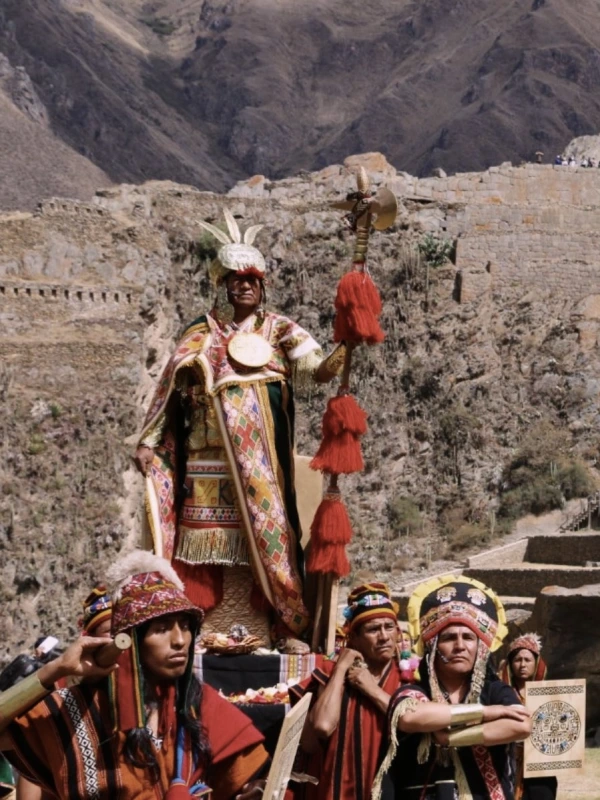
Since 1944, performances of Apu Ollantay have been held at the archeological site of Ollantaytambo annually as part of the festivities associated with Inti Raymi, the Andean New Year, in historically-informed reconstruction of traditional culture presented for the entertainment of tourists and local visitors.