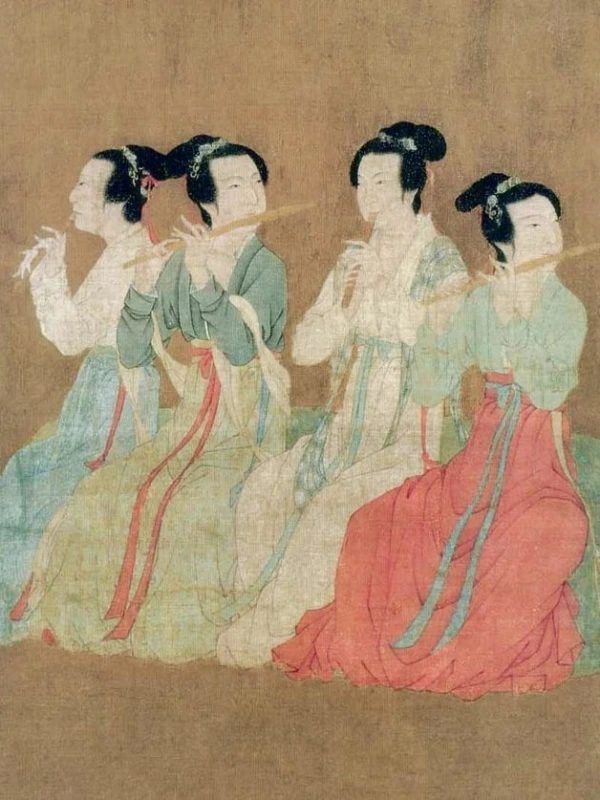
听蜀僧濬弹琴
“Tīng shǔ sēng jùn tán qín” (“Listening to the Monk Jun Play his Qin”)
by Lǐ Bái
- 👥Han Chinese
- 🗣︎Classical Chinese
- 📍Sichuan, CN
Regulated verse emphasizes level and oblique tones, parallelism, and relatively strict rhythmic rules. Even so, Li Bai’s five-character regulated verse is written with remarkable freshness and clarity, seemingly without effort. This natural artistic beauty, like “a lotus emerging from clear water, naturally free of embellishment,” can move the human heart more deeply than any ornamentation.
LǏ BÁI, also known as Li Po, was a renowned Chinese poet of the Tang dynasty born in 701, celebrated for his romantic and imaginative verse. He’s often considered one of China’s greatest poets, alongside his friend and contemporary Du Fu. Li Bai’s life was marked by wanderlust and a yearning for political office, though he largely followed his poetic pursuits instead. His works are known for their rich imagery, spontaneity, and use of Daoist themes.