ᬕᬫ᭄ᬩᬸᬄ
Gambuh
- 👥Balinese
- 🗣︎Kawi/Balinese
- 📍Bali, ID
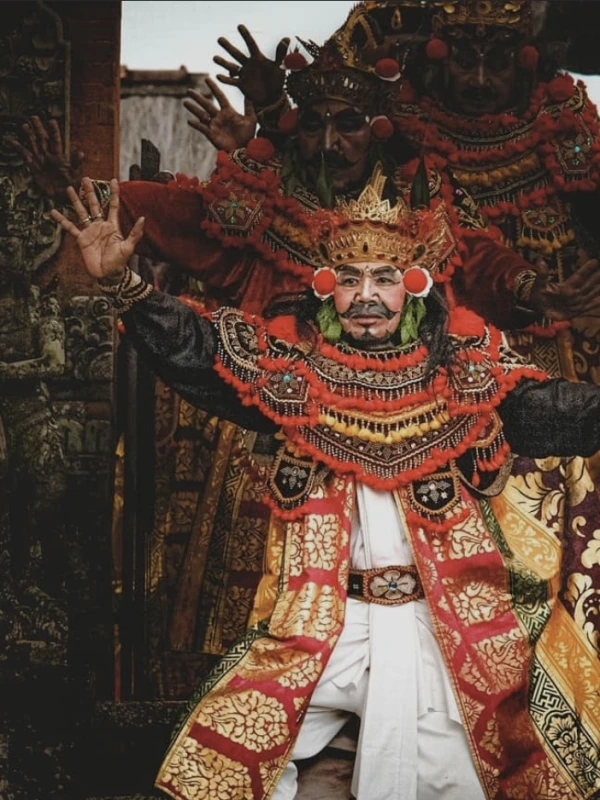
Gambuh is a form of musical dance drama from Bali, Indonesia, that masterfully blends dance, music, acting, and drama into a captivating theatrical experience. Dating back to the late-Majapahit era (around the 15th century), Gambuh is considered the progenitor of many other forms of Balinese performing arts, including Legong, Topeng masked dance, and Arja opera.
The narratives of Gambuh pieces are primarily drawn from the Malat, a Balinese kidung (epic poem) connected to the Panji cycle of stories that originated in East Java. Some Gambuh performances also draw from the Hindu epics Ramayana and Mahabharata. Refined characters called alus speak in Kawi, an old literary language, while lower-status characters translate for the audience into contemporary Balinese.
Gambuh choreography is characterized by stiff shoulders, expressive finger movements, and a distinct basic posture with outwardly turned knees. Performances are accompanied by a specialized gamelan ensemble, including very low bamboo flutes called suling gambuh, a rebab (bowed lute), and various percussion instruments, including gongs and drums.
Despite its historical significance, Gambuh is increasingly rare today, with only a few active groups remaining. Efforts to safeguard and revive Gambuh are crucial to ensure the survival of this invaluable part of Balinese and Indonesian intangible cultural heritage.