കൂടിയാട്ടം
Kūṭiyāṭṭaṁ
- 👥Malayali
- 🗣︎Sanskrit
- 📍Kerala, IN
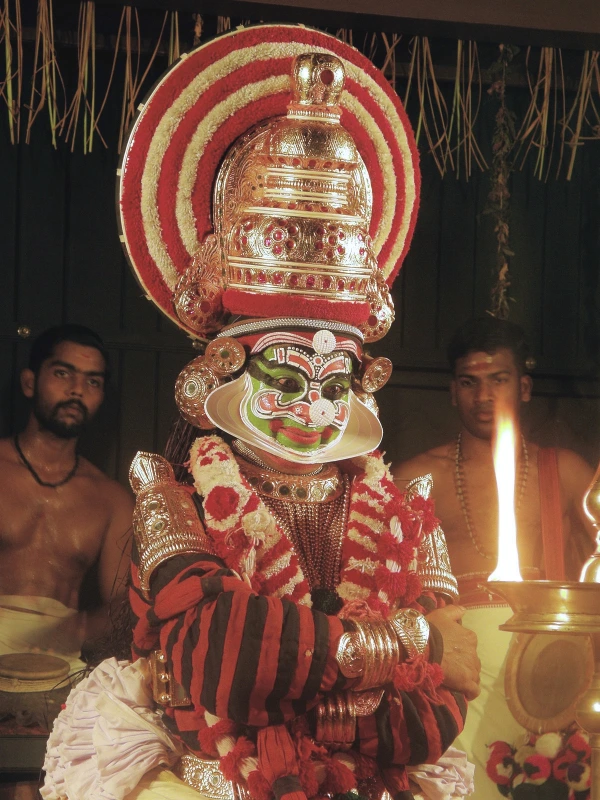
Kutiyattam is a traditional performing art from Kerala, India, representing a local Malayalam synthesis of classical Sanskrit theatre and Tamil Koothu drama. Its origins lie in the works of 9th-century playwright-king Kulasekhara, and it was further formalized in the 15th century to its contemporary form.
In its stylized and codified theatrical language, neta abhinaya (eye expression) and hasta abhinaya (the language of gestures) are prominent. They focus on the thoughts and feelings of the main character.
Actors undergo 10 to 15 years of rigorous training to become fully-fledged performers with sophisticated breathing control and subtle muscle shifts of the face and body. The actor’s art lies in elaborating a situation or episode in all its detail. Therefore, a single act may take days to perform and a complete performance may last up to 40 days.
Kutiyattam is traditionally performed in theatres called Kuttampalams, which are located in Hindu temples. Access to performances was originally restricted, owing to their sacred nature, but the plays have progressively opened up to larger audiences.
The male actors hand down to their trainees detailed performance manuals, which, until recent times, remained the exclusive and secret property of selected families. With the collapse of patronage along with the feudal order in the 19th century, the families who held the secrets to the acting techniques experienced serious difficulties.
After a revival in the early 20th century, Kutiyattam is once again facing a lack of funding, leading to a severe crisis in the profession. In the face of this situation, the different bodies responsible for handing down the tradition have come together to join efforts in order to ensure the continuity of this Sanskrit theatre.